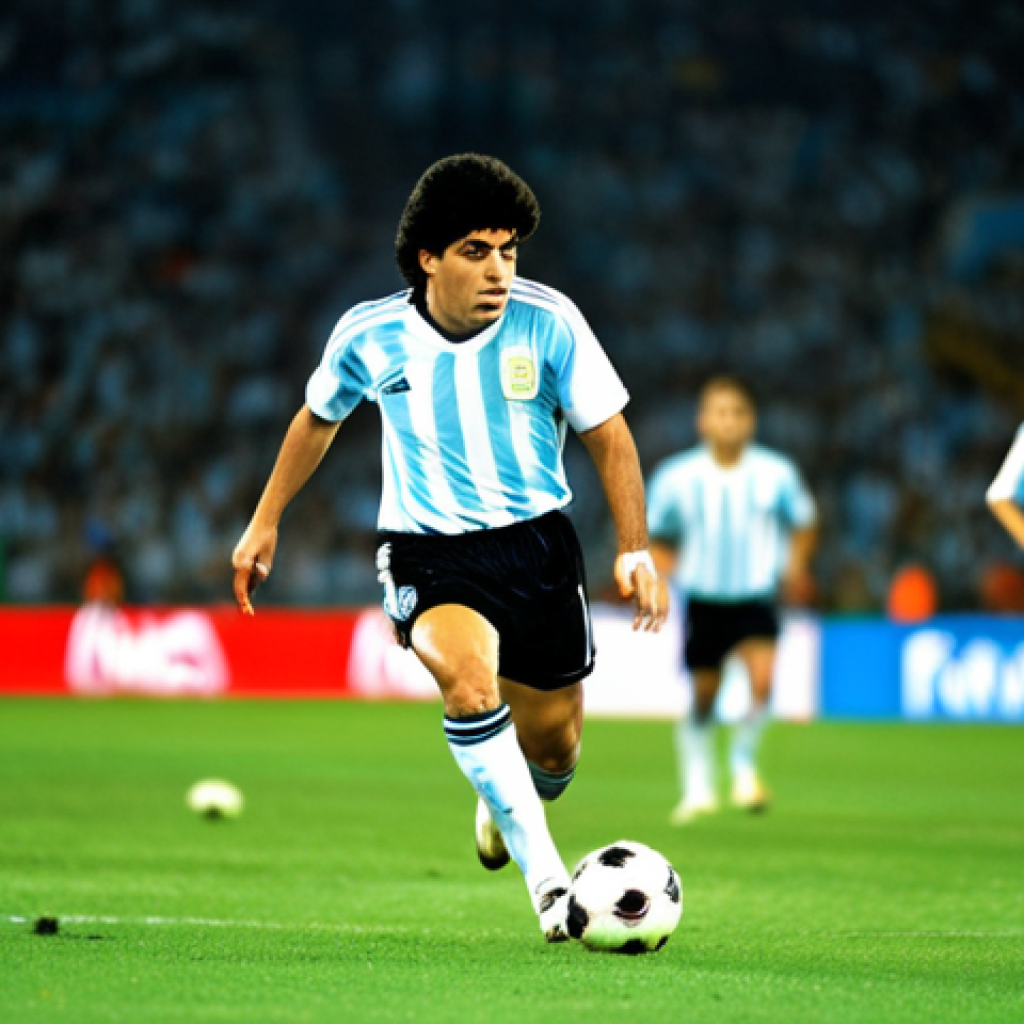
Diego Maradona, a name synonymous with footballing genius, wasn’t just about dazzling dribbles and that infamous ‘Hand of God.’ His philosophy on the pitch went far deeper than just winning.
It was about passion, a relentless fighting spirit, and an almost spiritual connection to the ball. He believed in playing for the love of the game, for the people, and with an unwavering commitment to his team.
I think that’s what truly set him apart. To really understand his greatness, we need to delve into the core principles that guided his every move on the field.
Let’s explore his football philosophy in more detail below.
Alright, let’s dive into Maradona’s footballing ethos.
Embracing “La Gambeta”: The Art of the Dribble

Maradona wasn’t just a dribbler; he was an artist of “La Gambeta,” the uniquely South American style of dribbling that’s all about close control, agility, and a touch of audacity.
I remember watching him weave through entire defenses like they were cones in a training session. It wasn’t just about getting past players; it was about humiliating them, making them look foolish with a feint here, a nutmeg there.
He treated defenders like they were standing still in a video game, that’s the only way to explain it. He had this uncanny ability to change direction in the blink of an eye, leaving opponents sprawling and gasping for air.
It was more than just skill; it was an inherent understanding of space and timing, a dance with the ball that mesmerized the world. I think many players can learn to dribble, but he was born to dribble, his technique was unteachable.
The Importance of Close Control
His ball control was simply otherworldly. The ball seemed glued to his left foot, responding to his every whim. He could trap it dead with the softest of touches, even under immense pressure.
When I played as a kid, my coach always used Maradona as an example of someone who had mastered close control. It was like the ball was an extension of his body, an extra limb that he wielded with unparalleled precision.
That level of control allowed him to dictate the tempo of the game, to slow it down or speed it up as he saw fit.
Using Deception and Agility
Maradona’s brilliance wasn’t purely about brute force, he was deceivingly quick. His agility allowed him to twist and turn away from tackles, while his clever use of feints and body language would send defenders the wrong way time and time again.
The Element of Surprise
The element of surprise was key to Maradona’s dribbling. He wasn’t predictable. He’d lull defenders into a false sense of security before unleashing a burst of pace or a sudden change of direction.
I think that is something the best dribblers have in common with Maradona. He kept the other team always on their toes.
The “Pibe” Mentality: Playing with Street Smarts
Maradona embodied the “pibe” mentality, a streetwise cunning honed from playing in the “potreros” (dusty football pitches) of Argentina. This meant he had this innate ability to bend the rules, to use every trick in the book to gain an advantage, whether it was a subtle foul or a moment of gamesmanship.
To understand this, you have to consider the environment he came from.
The Art of Gamesmanship
He was a master of gamesmanship, knowing exactly how far he could push the boundaries without getting caught. This wasn’t about cheating; it was about being street smart, about knowing how to exploit the weaknesses of his opponents and the referee.
I remember countless times watching him draw fouls with the slightest of touches, or subtly impede defenders without them realizing it. It was an art form.
Adapting to Any Situation
Growing up playing in tough conditions, Maradona learned to adapt to any situation. Whether it was a muddy pitch, a hostile crowd, or a physical opponent, he always found a way to thrive.
He brought that adaptability to every game he played, always finding solutions to the challenges he faced. To be honest, this can be difficult for those who haven’t played in tougher environments.
The Value of Resilience
The “pibe” mentality also instilled in him a remarkable resilience. He never gave up, no matter how tough the circumstances. He’d get knocked down time and time again, but he always got back up, ready to fight for his team.
When he played for Argentina, you could see the passion written all over him. That resilience was a key ingredient in his success.
Unwavering Passion and National Pride
Maradona played with an unmatched passion and a burning desire to represent his country. When he wore the Argentina shirt, he transformed into something more than just a footballer; he became a symbol of national pride and hope.
He poured his heart and soul into every game, and his passion was infectious, inspiring his teammates and the entire nation. You could see it in his eyes, hear it in his roar after scoring a goal; he was playing for something bigger than himself.
Playing for the People
He felt a deep connection to the working-class people of Argentina, and he saw himself as their representative on the world stage. He played for them, for their dreams, and for their aspirations.
His victories were their victories, and his defeats were their defeats. He understood their struggles, and he wanted to give them something to cheer about, something to be proud of.
Leading by Example
Maradona led by example, both on and off the field. He was a fearless competitor, always willing to put his body on the line for his team. I remember once watching a documentary about him and his teammates, where they mentioned that he never shied away from a tackle, never backed down from a challenge.
He was a true leader, inspiring his teammates to give their all.
Embracing the Pressure
He thrived under pressure, relishing the responsibility of being the team’s talisman. The bigger the game, the higher the stakes, the better he played.
He embraced the pressure, using it as fuel to drive him to even greater heights. This is something every player can try to learn from.
Teamwork as a Force Multiplier
While often celebrated for his individual brilliance, Maradona deeply understood the importance of teamwork. He recognized that even the most talented player cannot win games alone.
He fostered a sense of camaraderie and unity within his teams, inspiring his teammates to work together towards a common goal. He had the ability to elevate the performance of those around him, making them believe that anything was possible.
Fostering Camaraderie
Maradona was a master at fostering camaraderie within his teams. He was a natural leader, and he knew how to bring people together. He created a sense of belonging, making his teammates feel valued and appreciated.
He understood that a united team is a strong team.
Empowering Teammates
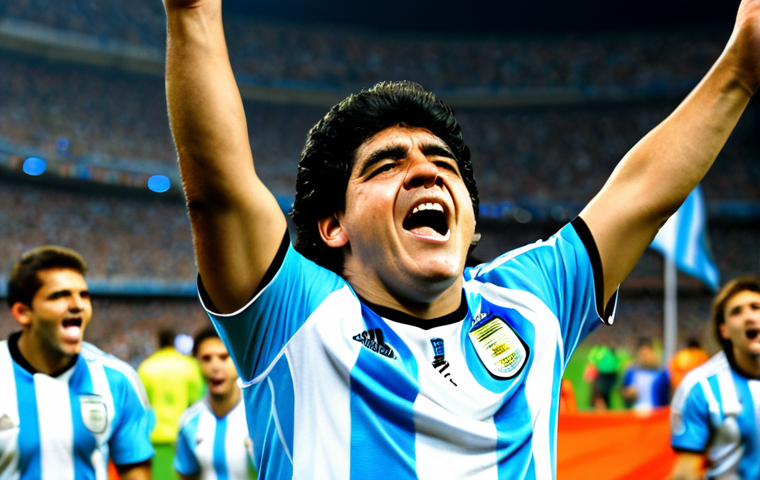
He empowered his teammates, giving them the confidence to express themselves on the field. He trusted them, and they trusted him in return. He made them believe that they were capable of anything, and he inspired them to give their best.
Strategic Collaboration
Maradona wasn’t just about individual brilliance; he was also a strategic thinker who understood how to collaborate with his teammates to create scoring opportunities.
He had a knack for knowing when to pass, when to dribble, and when to shoot. Here’s a summary table of Maradona’s key football philosophies:
| Philosophy | Description | Key Elements |
|---|---|---|
| La Gambeta | The art of close-control dribbling. | Close control, agility, deception, surprise. |
| Pibe Mentality | Street smarts and resourcefulness. | Gamesmanship, adaptability, resilience. |
| Passion and Pride | Playing with heart and representing the nation. | Playing for the people, leading by example, embracing pressure. |
| Teamwork | Collaboration and unity within the team. | Camaraderie, empowering teammates, strategic collaboration. |
The Pursuit of Perfection
Maradona was always striving for perfection. He was never satisfied with mediocrity. He constantly pushed himself to improve, to hone his skills, and to reach new heights.
Even after achieving so much, he remained hungry for more, always seeking to surpass his own limitations. He understood that true greatness requires relentless dedication and a unwavering commitment to excellence.
I remember hearing that he was always the first one at training, and the last one to leave.
Continuous Improvement
He was always looking for ways to improve his game, whether it was refining his dribbling technique, working on his passing accuracy, or studying the tactics of his opponents.
He understood that continuous improvement is essential for staying at the top.
Pushing Boundaries
Maradona constantly pushed the boundaries of what was possible on the football field. He dared to try things that others wouldn’t even dream of. He was a true innovator, and he revolutionized the way the game was played.
Setting High Standards
He set high standards for himself and for his teammates. He demanded excellence from everyone around him, and he inspired them to raise their game. He understood that true greatness is contagious.
Unpredictability as a Strategic Asset
Maradona thrived on unpredictability, making it a cornerstone of his game. Opponents struggled to anticipate his next move, as he possessed an uncanny ability to improvise and adapt to any situation.
Whether it was a sudden burst of pace, a no-look pass, or an audacious shot from distance, he always kept defenders guessing. This unpredictability made him a nightmare to defend against and a constant threat to score.
He was the ultimate wild card.
Mastering Improvisation
He was a master of improvisation, able to conjure up moments of magic out of thin air. He had this innate ability to read the game and react instinctively to whatever was happening around him.
Breaking the Mold
Maradona refused to be confined by traditional tactics or formations. He played with a freedom and creativity that was truly unique. He broke the mold, and he inspired others to do the same.
Exploiting Uncertainty
He understood that uncertainty can be a powerful weapon. He used his unpredictability to create confusion and chaos in the opposition’s defense, opening up opportunities for himself and his teammates.
Defenders had no idea what he would do next. Maradona’s philosophy wasn’t just about winning games; it was about inspiring people, about playing with passion, and about pushing the boundaries of what was possible.
In Conclusion
Maradona’s footballing ethos extended far beyond mere skill; it embodied passion, street smarts, and an unwavering commitment to his team and his nation. He wasn’t just a player; he was an artist, a leader, and an inspiration to millions. His legacy continues to inspire players and fans alike, reminding us that football is more than just a game; it’s a reflection of life itself. His is a style and mentality that all aspiring players can emulate, the ‘Maradona Way’.
Useful Information
1. Learn to Dribble with Both Feet: While Maradona was known for his left foot, practicing with your weaker foot can significantly improve your overall ball control and unpredictability.
2. Study Great Dribblers: Watch videos of Maradona and other legendary dribblers like Messi and Ronaldinho to learn their techniques and adapt them to your own style.
3. Practice in Tight Spaces: Sharpen your close control and agility by practicing dribbling in confined areas, forcing yourself to react quickly and make quick decisions.
4. Develop Your Gamesmanship: Understand the rules of the game and how to use them to your advantage, but always play fair and with respect for your opponents. Watch professional matches to identify when players are successful in taking advantage of the game.
5. Embrace Pressure: Practice playing under pressure by simulating game-like situations in training and learning to stay calm and focused when the stakes are high. Remember, pressure is a privilege.
Key Takeaways
* Embrace “La Gambeta”: Master the art of close-control dribbling with agility and deception. * Develop the “Pibe” Mentality: Be street smart, resourceful, and resilient on the field.
* Play with Passion and Pride: Represent your team and your nation with unwavering dedication. * Value Teamwork: Foster camaraderie and unity within your team.
* Strive for Perfection: Continuously improve your game and push your limits. * Be Unpredictable: Keep your opponents guessing with improvisation and creativity.
Frequently Asked Questions (FAQ) 📖
Q: Besides the “Hand of God,” what was a key element of Maradona’s footballing philosophy that made him so revered?
A: Beyond that controversial moment, which, let’s be honest, everyone still talks about, Maradona was all about playing with pure, unadulterated passion.
He wasn’t just going through the motions; you could see it in his eyes. He fought for every ball, as if his life depended on it, and that intense commitment resonated deeply with fans.
He really made you feel something when you watched him play.
Q: How did Maradona’s personal beliefs impact his style of play on the field?
A: Maradona always seemed to carry the weight of his people on his shoulders. He saw football as more than just a game; it was a way to uplift and inspire.
He played with a fire, a sense of responsibility to the working class. It wasn’t about the money or the fame for him – it was about giving everything he had for the fans who believed in him.
That underdog mentality fueled his extraordinary performances.
Q: You mentioned Maradona’s “spiritual connection” to the ball. Can you elaborate on what that looked like in practice?
A: You know, it’s hard to describe unless you’ve witnessed it firsthand. It was like the ball was an extension of his own body. The way he could dribble through a sea of defenders, almost defying physics, was magical.
It wasn’t just skill; it was intuition, a deep understanding of the game, and an almost telepathic connection with the ball. I remember watching him dance around defenders; it was less a game and more like poetry in motion.
📚 References
Wikipedia Encyclopedia
구글 검색 결과
구글 검색 결과
구글 검색 결과
구글 검색 결과
구글 검색 결과